

The Growing Role of Software-Defined Radios in Vehicle-to-Everything (V2X) Communication
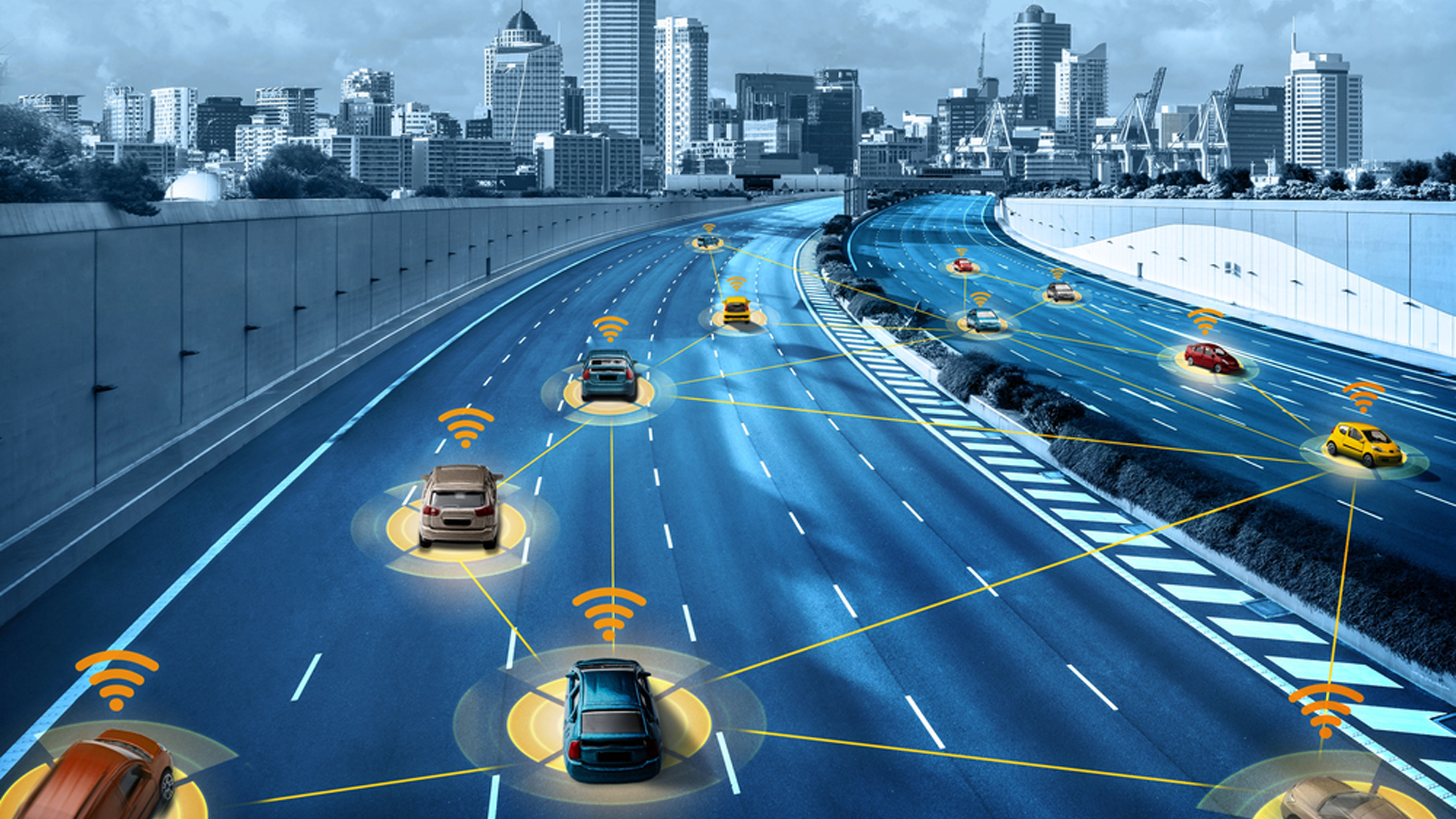
Vehicles in the modern era must exchange information continuously with other vehicles, infrastructure, pedestrians, and cloud networks through Vehicle-to-Everything (V2X) communication. This connected ecosystem is essential for improving road safety, traffic efficiency, and autonomous mobility. Software-defined radios (SDRs) in automotive manufacturing sit at the core of this transformation, enabling signal processing through programmable software rather than fixed hardware.
As connected vehicles continue to proliferate, SDRs provide seamless updates, protocol flexibility, and broad compatibility across evolving communication standards. For automotive manufacturers, the shift toward SDR-powered V2X systems represents both a technological upgrade and a strategic opportunity.
By embracing this evolution, manufacturers can streamline production, strengthen system reliability, and future-proof vehicle platforms. At SAAB RDS, we support this transition through intelligent digital transformation strategies that enhance efficiency, product quality, and long-term profitability.
V2X and Software-Defined Radios
V2X communication enables vehicles to remain aware of their surroundings delivering warnings about sudden stops, coordinating with traffic signals, and exchanging safety-critical information in real time.
While dedicated short-range communications (DSRC) once dominated V2X networks, cellular V2X (C-V2X) technologies now prevail due to their extended coverage, scalability, and integration with mobile infrastructure.
Software-defined radios are ideally suited to process these signals because they operate through programmable configurations. Instead of relying on hardware modifications, SDRs shift between frequencies and communication protocols through software updates. For example, a radio may operate at 5.9 GHz for vehicle-to-vehicle communication and dynamically transition to sub-6 GHz bands for network handoffs.
This adaptability is critical as vehicles evolve into software-centric platforms that require over-the-air (OTA) updates to patch vulnerabilities, improve performance, or add new capabilities post-production.
Manufacturers also benefit operationally. Testing cycles can be shortened significantly because SDR platforms can simulate and reproduce diverse communication scenarios entirely through code-based adjustments.
Key Advantages in Automotive Connectivity
Software-defined radios provide flexibility that legacy hardware systems cannot match. A single programmable unit can support multiple communication standards without increasing physical complexity.
Engineers can code adaptive responses to interference, switch to backup frequency bands, and ensure uninterrupted communication even in dense urban environments.
Safety improves as vehicles exchange precise positioning, speed, and hazard information. SDR-enabled connectivity also integrates seamlessly with cloud-based navigation, infotainment, and fleet management systems all protected by software-defined security layers capable of detecting and blocking intrusions.
From a production standpoint, SDRs reduce hardware redundancy. A consolidated unit can manage radar communication, telematics, and V2X functions, minimizing component count, assembly time, and manufacturing costs.
Technical Underpinnings of SDR in V2X Systems
A software-defined radio begins by sampling incoming radio frequency (RF) signals and converting them into digital data streams. These streams are processed by general-purpose processors, field-programmable gate arrays (FPGAs), or graphics processing units (GPUs).
Through programmable filters, modulation techniques, and signal conditioning algorithms, SDRs adapt dynamically to changing communication environments.
Manufacturers validate SDR performance using advanced simulations that replicate real-world conditions such as highway merging, urban congestion, and signal obstruction scenarios. Code-level refinements improve beamforming accuracy and ensure signal clarity despite environmental interference.
Merging SDR with IoT for Enhanced Vehicle Ecosystems
Modern vehicles incorporate extensive IoT sensor networks. Software-defined radios serve as communication hubs, aggregating data from these sensors and broadcasting critical summaries to nearby vehicles.
This coordinated data exchange enables shared situational awareness, helping vehicles respond proactively to hazards.
Reliable V2X performance requires high-quality data acquisition systems capable of capturing signals from diverse sources and formatting them for lossless transmission.
Within manufacturing facilities, IoT-enabled assembly tools verify SDR installation accuracy in real time and flag configuration inconsistencies before vehicles leave the production line. Predictive maintenance analytics further enhance reliability by monitoring radio performance logs and scheduling proactive servicing to prevent field failures.
AI’s Contribution to Smarter SDR Operations
Artificial intelligence enhances SDR performance by analyzing communication patterns and optimizing transmission strategies.
AI models evaluate historical signal exchanges to identify the clearest communication channels, reducing interference from environmental obstacles, construction zones, or adverse weather conditions. Predictive algorithms can anticipate traffic density and dynamically adjust transmission power preserving battery life in electric vehicles while maintaining communication quality.
In manufacturing environments, AI examines testing datasets to detect recurring firmware anomalies. Insights from this analysis inform code improvements, increase production yield, and reduce scrap or rework costs.
As Saudi Arabia advances its Vision 2030 objectives, AI-driven SDR testing and validation support the development of high-tech automotive exports and next-generation manufacturing capabilities.
Cybersecurity Imperatives
While connectivity enables innovation, it also introduces new vulnerabilities. Spoofed or malicious signals could compromise vehicle coordination and safety.
Software-defined architectures strengthen security through adaptive encryption protocols, zero-trust authentication models, and remotely deployable security patches.
Manufacturers can embed cybersecurity safeguards during production, and controlled test environments can simulate attack scenarios to validate system resilience.
At SAAB RDS, our zero-trust security solutions protect infrastructure and data across connected ecosystems ensuring that vehicles launch with built-in protection against evolving cyber threats.
Forge Ahead with Proven Partners
From foundational flexibility to AI-driven intelligence, software-defined radios are redefining automotive connectivity. They deliver the safety enhancements, operational efficiency, and cost optimization that modern manufacturers require.
In Saudi Arabia’s rapidly evolving manufacturing landscape, SDR-enabled V2X systems support the Kingdom’s Vision 2030 ambitions transforming factories into innovation-driven ecosystems.
SAAB RDS offers the technical depth, cross-vendor expertise, and SaaS-based solutions needed to implement SDR-powered V2X platforms effectively. Whether building new systems from the ground up or modernizing existing architectures, we provide tailored strategies that align with your operational goals.
Contact SAAB RDS today to begin your digital transformation journey in connected vehicle communication.
